
Written by: 
It’s release day. The code has been merged. Testing is complete. Everyone is ready to move on to the next sprint.
Then someone asks the question nobody planned for:
Can we get the release notes ready?
The room goes quiet.
One person starts opening Jira tickets. Another scrolls through Slack, looking for updates. Someone else tries to remember which fixes actually made it into the release.
What should have taken minutes turns into an hour of piecing together information from different places.
The release itself wasn’t the issue. The real challenge was explaining what had changed.
This is the last mile of release management. Teams can plan well, build well, and test well, yet still struggle with the final step of turning completed work into clear communication.
In this blog, we’ll look at why this happens and how to enhance release management at the last mile.
Defining the “Last Mile” Problem
The last mile isn’t about delivering software. It’s about making the release understandable to everyone who depends on it. Release management can run smoothly through planning, development, and QA but often stumbles when turning completed work into clear stakeholder-ready communication.
Planning tools such as Gantt charts are excellent for tracking timelines, dependencies, and project progress. However, they do not explain the changes made in the release or communicate them to stakeholders.
Here is the actual gap. Tracking and explaining work are two entirely different tasks, and most teams only create a system for the first.
Why Release Notes and Reports Break Down
This doesn’t happen because people are irresponsible. It happens because the process does not allow for anything else. Here’s where things usually go wrong:
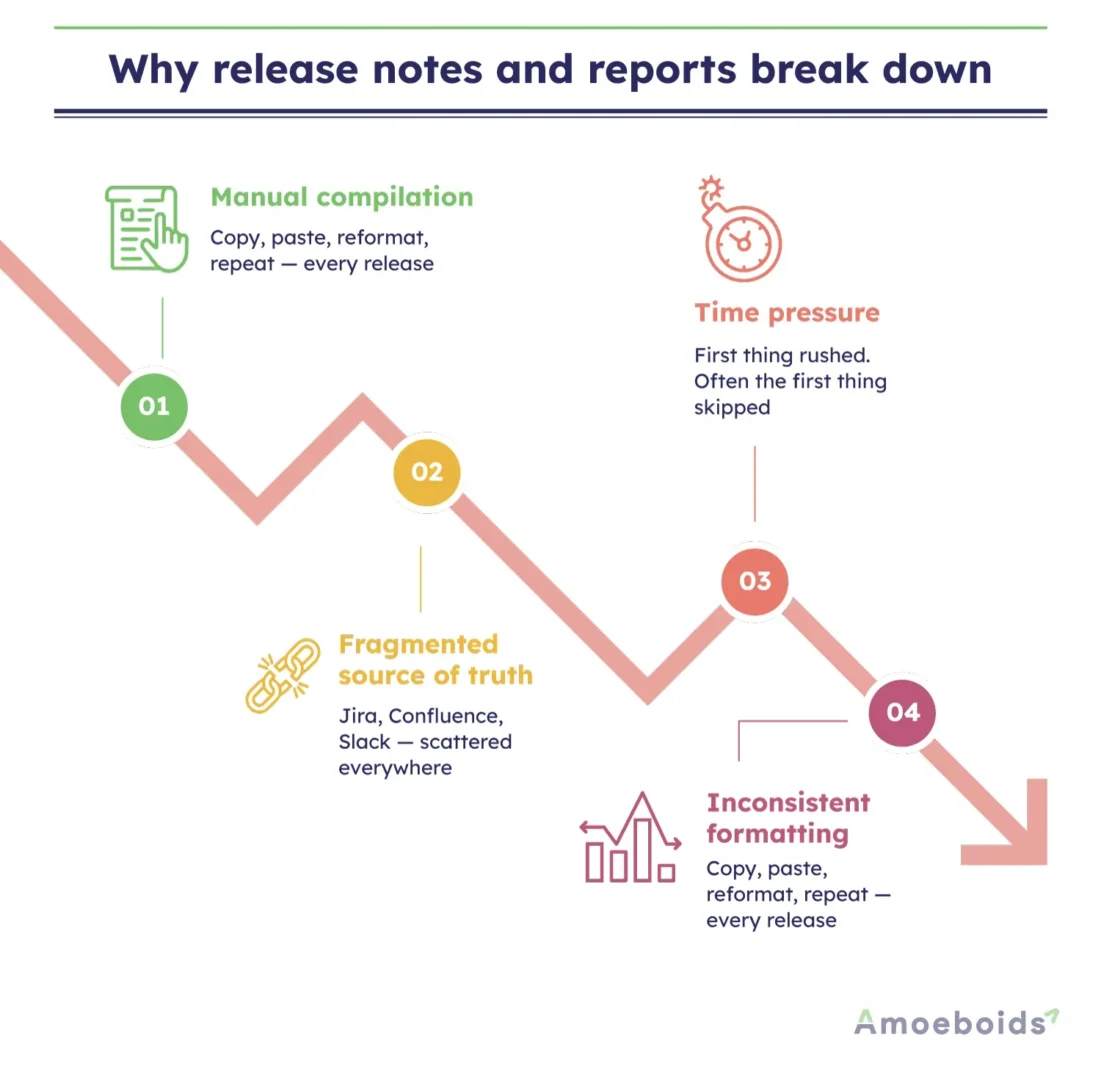
- Manual compilation: Engineers manually copy tickets and reformat notes and reports for each release. It takes actual time, and there’s always a chance that something minor will be ignored.
- Fragmented source of truth: The details of what changed exist in too many places at once. A bit sits in Jira, more in Confluence, and the rest in random Slack messages nobody can find later.
- Time pressure: When a release date approaches, notes and reports are typically the first thing to be rushed. Sometimes they are completely skipped because there is simply not enough time.
- Inconsistent formatting: Every team seems to write notes and reports in their own unique way. Stakeholders never know what to expect because the style differs depending on who wrote it.
Each of these is a minor annoyance on its own. Every time a release is made, they turn a simple update into a scramble. And because the same four things keep causing problems for teams, most simply accept it as normal rather than question why it keeps happening.
The Upstream Root Cause: Planning Gaps
The last-mile problem frequently begins well before release day. When timelines, scope, and resources are not consistently updated, teams struggle to determine which work is truly completed and ready for communication.
The real trouble begins when the project plan gradually falls out of sync with reality. As priorities shift and work evolves, teams lose track of what is actually completed.
By release day, the person writing the release notes frequently needs to gather information from multiple sources. This makes it difficult to produce accurate and consistent updates.
The Real Cost of a Broken Last Mile
It’s easy to dismiss messy release notes as unnecessary noise. It rarely remains so small.
- Sales and support teams are confused or underinformed.
- Customer trust is weakened by changelogs that are vague, late, or inconsistent.
- Repeated engineering hours lost re-explaining “what changed” after every release.
A sprint review does not include any of this information. It appears quietly, in the same support ticket, asked five different ways, and by the time anyone connects the dots, real time and trust have been lost. Nobody writes “confusing changelog” on a postmortem, but it’s usually right below whatever problem made the list.
What a Strong Last Mile Looks Like
Fortunately, this is not a necessary component of release management. Teams that consistently provide clear release communication tend to adhere to the same principles. So what does it look like when a team gets this part right? A few things are consistently true:
- Notes are generated directly from source data (tickets, commits, sprints), rather than being manually reconstructed.
- A consistent structure and tone throughout each release.
- Delivery occurs immediately after release, rather than several days later.
Teams that succeed at this are not secretly better writers. They simply removed the section where someone had to rebuild the story from memory, and that one change resolved almost everything else on this list. Give the right person accurate source data, and a clear note will almost come out on its own.
Fixing the Planning Side
This is where things start to turn around. A tool built for exactly this, TeamBoard ProScheduler for Jira, keeps Gantt-based planning honest as things change. Here’s what that actually looks like in practice:
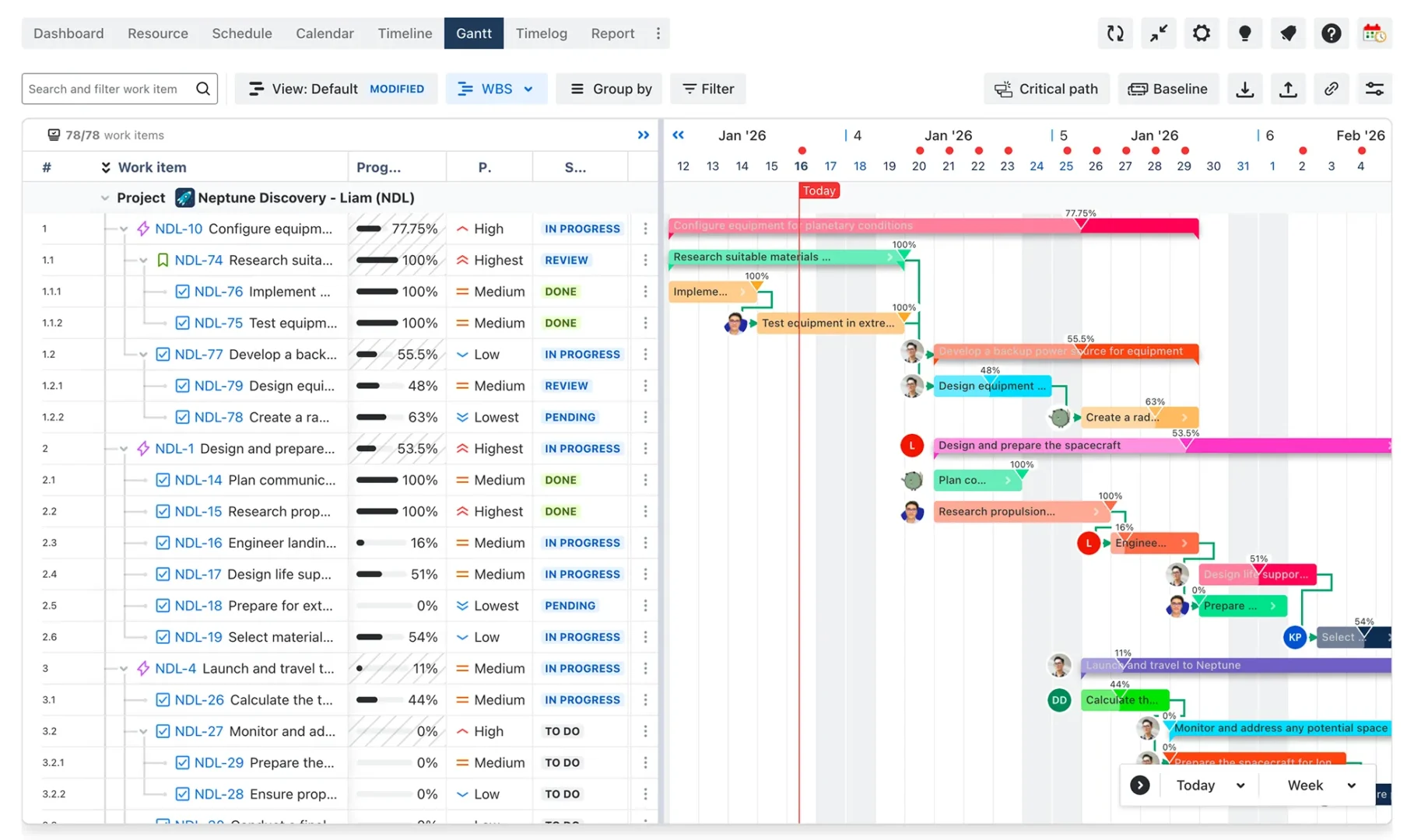
- Timelines, scope, and resources are visible throughout the life of a project, not just at the start.
- The Gantt chart stays aligned with real project progress through one centralised source of truth.
- Teams no longer have to rebuild project status from scratch.
- Teams always know what work has been completed because project data remains accurate throughout the release cycle.
- The chart changes from a kickoff day photo to something more akin to a live record that everyone can count on.
Keeping project data accurate throughout the release cycle provides a solid foundation for release communication. When everyone knows exactly what is finished, writing release notes becomes much faster and more accurate.
Fixing the Communication Side
Even with a perfect plan, someone has to translate “done” into words that a customer can read without squinting. This is the part that is usually rushed, copied by hand from ticket to ticket as the deadline approaches. The Automated Release Notes & Reports app for Jira removes the manual step entirely. Here’s what changes once it’s in place:
- Release notes and reports get built automatically, pulled straight from Jira data instead of copied manually.
- Everything is sent wherever people look, whether through Confluence, email, Slack, Teams, PDF, or PPTX.
- Nobody stays up late trying to remember what happened during the last few sprints.
- The release notes and reports practically write themselves from the work that already happened, not from someone’s rushed memory of it.
When combined with an already accurate plan, the final mile turns from a fire drill to something almost boring, in the best way possible.
Conclusion
The last mile is the one aspect of release management that every customer sees, and it’s the easiest to overlook. Fixing the last mile requires two things: keeping project data accurate throughout development and automatically turning completed work into clear release communication. Fix only one side, and the last mile still breaks down.
If you’re still scrambling for each release, that’s something to fix now.
See how TeamBoard ProScheduler for Jira keeps planning honest and how the Automated Release Notes and Reports app for Jira changes that plan into ready-to-send reports. Try both on your next release.